

Acupuncture
What is Acupuncture?
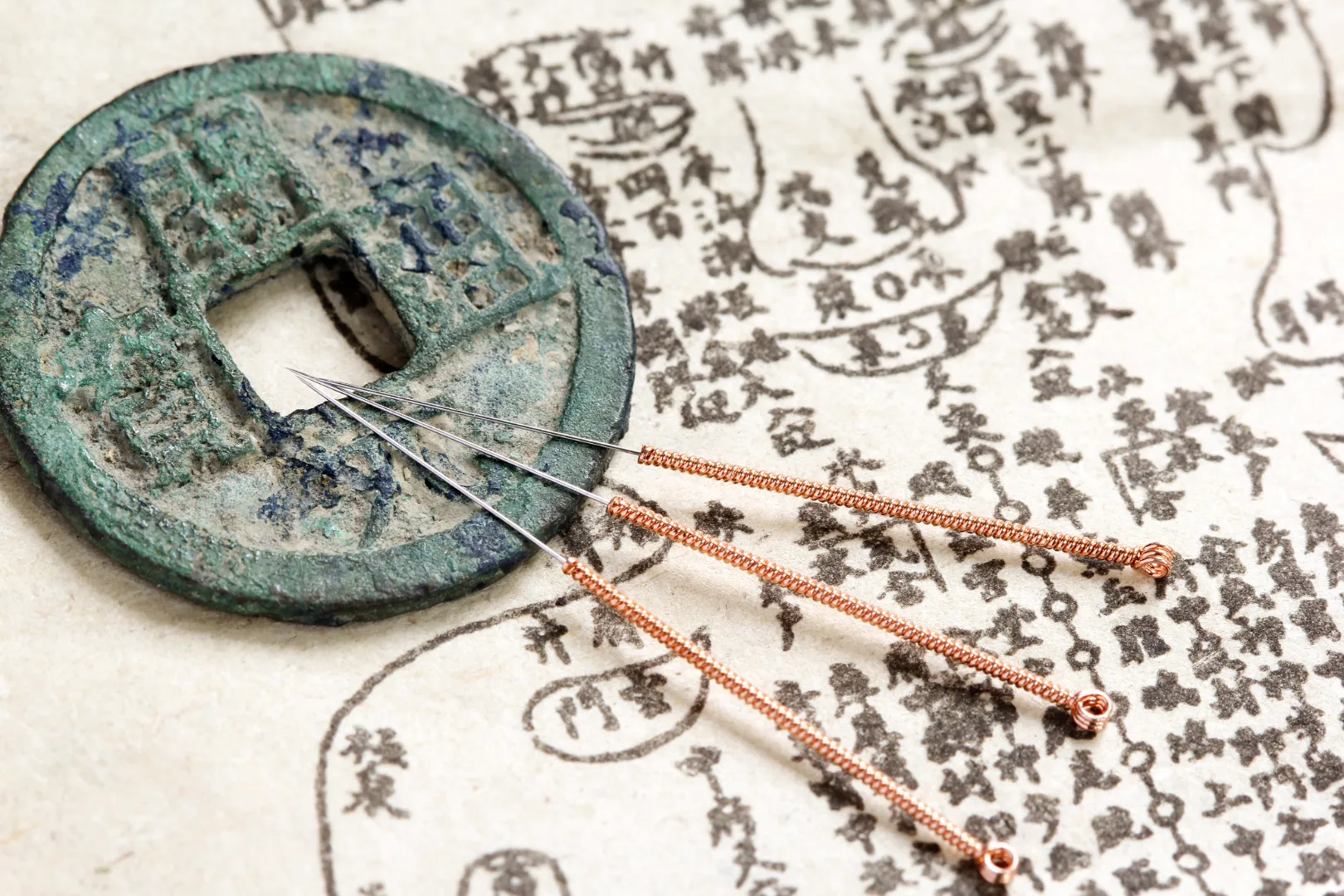
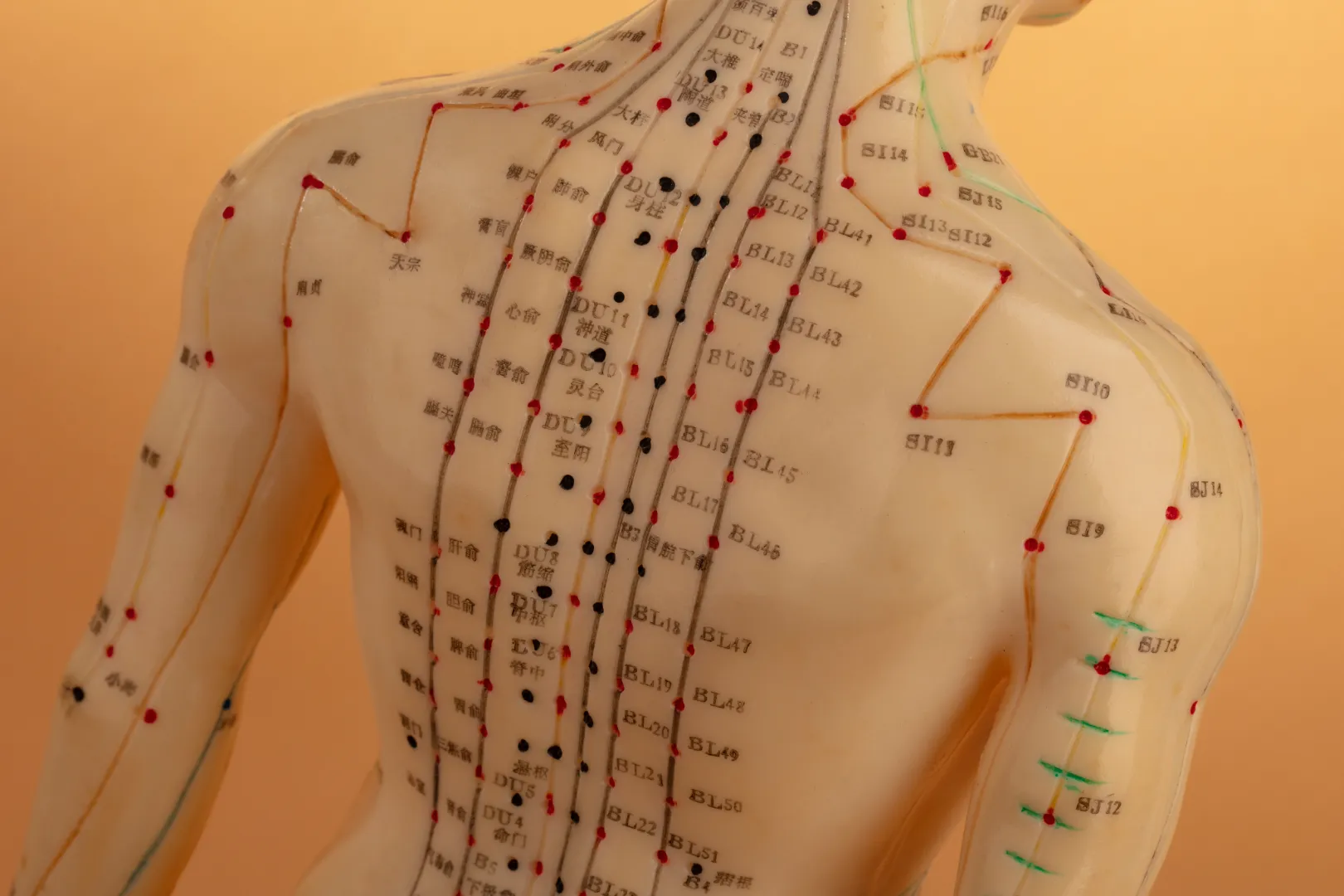
Acupuncturists are licensed health care professionals who practice acupuncture, a component of traditional Chinese medicine, in which thin needles are inserted into the body along acupuncture points which are a complex network of lines of energy, called meridians. Meridians are thought to encircle the body like global lines of longitude and latitude. The imbalance of energy blocks the flow of qi, the vital energy that regulates spiritual, emotional, mental, and physical balance. Acupuncture unblocks the flow of qi, by stimulating the central nervous system that signals the body to release various substances, including endorphins, the body's natural pain-killing chemicals. There are many ailments that can be treated by acupuncture.
Symptoms
- Neck pain
- Migraines
- Tension headaches
- Whiplash from auto injuries
- Jaw pain
- Back pain
- Shoulder pain
- Sinusitis
- Nerve pain
- Hip pain
- Pelvic pain
- Low back pain
- Knee pain
- Tendonitis
- Fibromyalgia
- Menstrual cramps
- Menopausal symptoms
- Sciatica
- Tennis elbow
- Carpal tunnel syndrome
- Mom thumb
- Plantar fasciitis
- Ankle pain/sprain
- Foot pain
- Strains and sprains
- Work related injuries
- Sports related injuries
- General wear and tear from overuse
Treatments
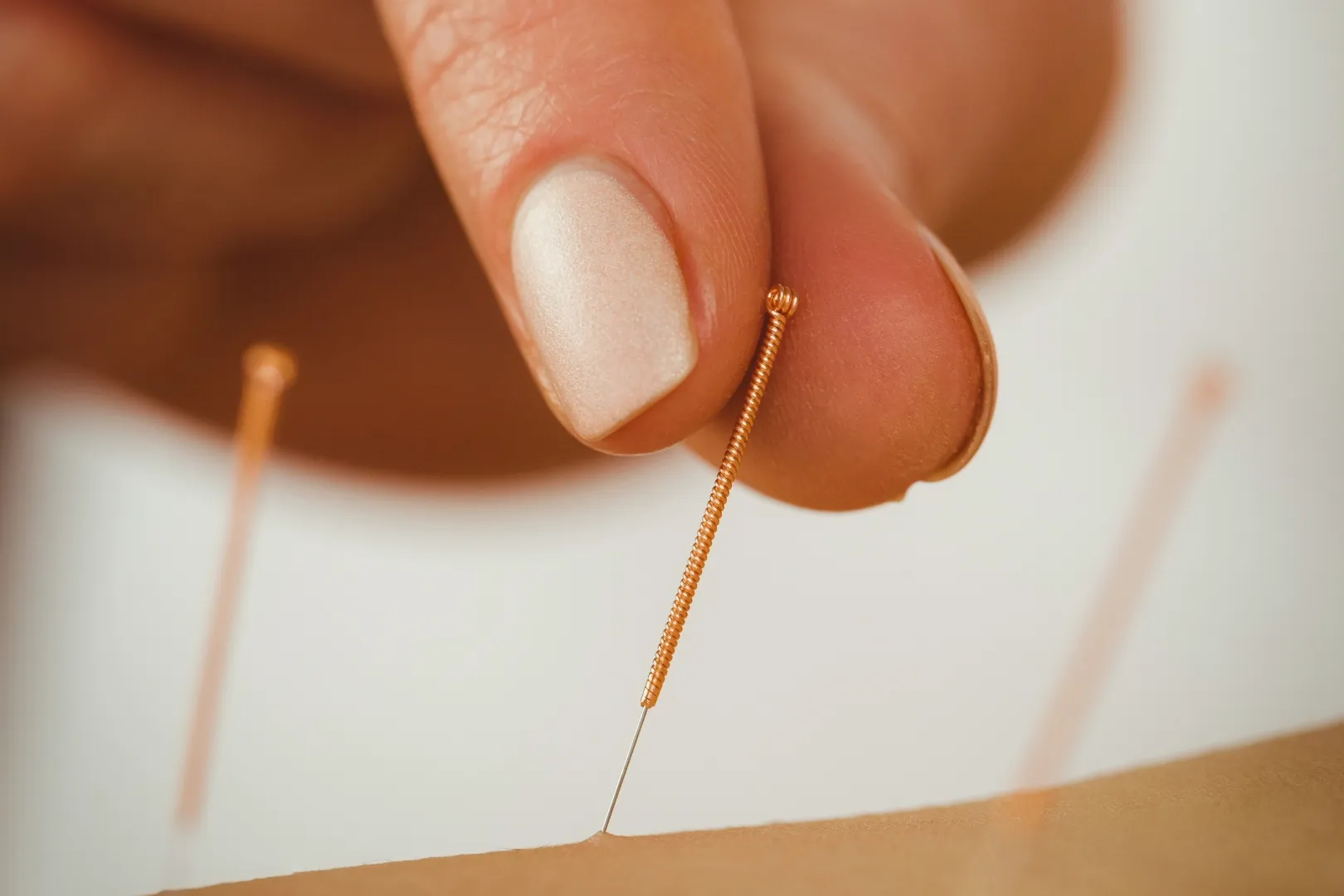
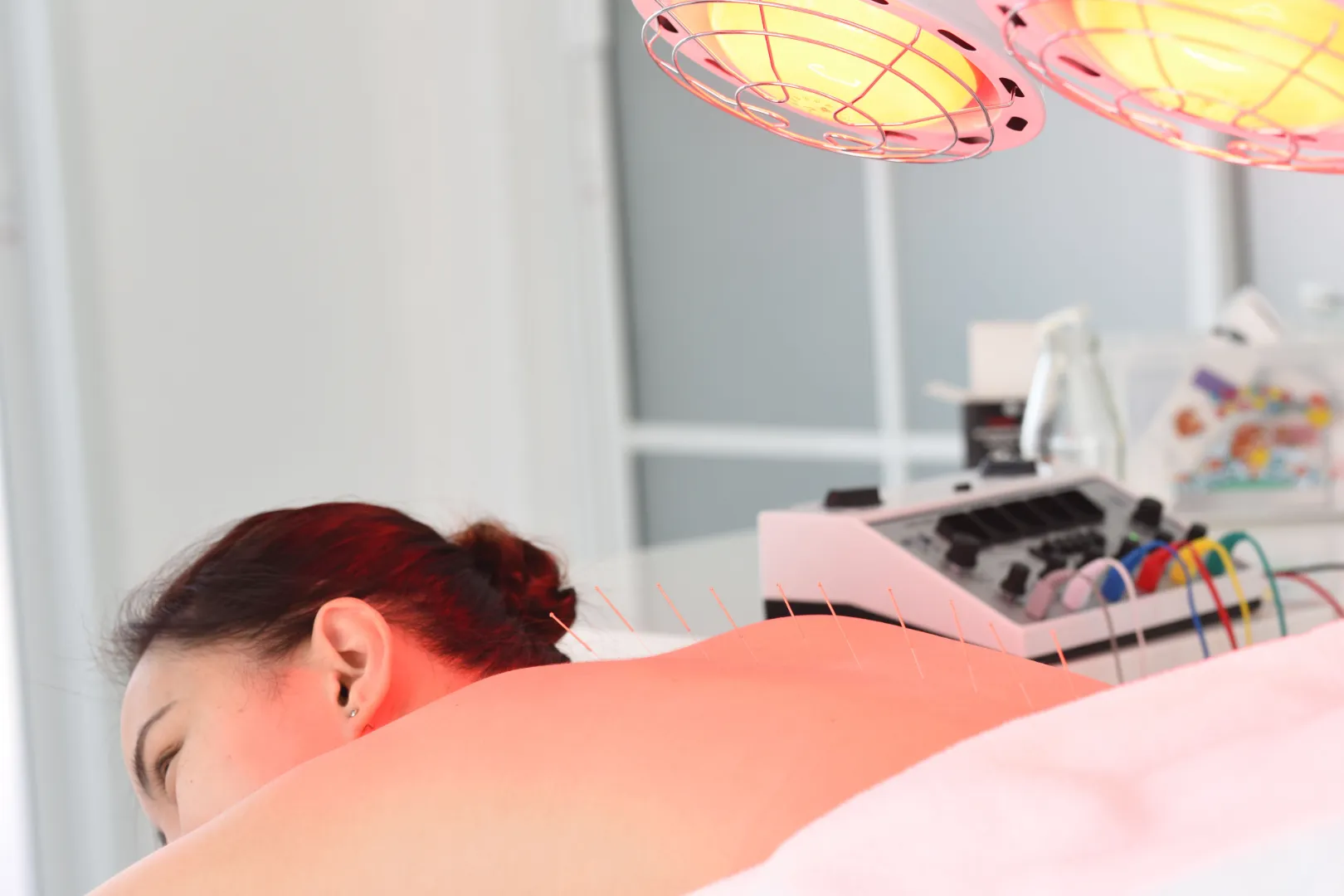
Once you are lying on the treatment table, acupuncture needles will be inserted along acupuncture points. Acupuncture needles are much thinner than medical needles so it is far less painful than getting a vaccine or having blood withdrawn. A small prick may be felt with each needle inserted and once the needle has reached its intended depth, a mild, dull ache, even a slight tingling or electric sensation may be felt. If any sensations are felt at all, they are short lived.
The treatments typically lasts between 15-20 minutes per side. Acupuncture is combined with a heat lamp to reduce inflammation, improve microcirculation, and reduce pain. The heat lamp is an alternative to moxibustion, which is the process of burning herbs near or on the skin to stimulate acupuncture points. Sometimes, massage therapy is applied to patients during the acupuncture session. Many patients find acupuncture relaxing and it is common to fall asleep during treatment.
Acupuncture and Qi
Acupuncture unblocks the flow of qi, by stimulating the central nervous system that signals the body to release various substances, including endorphins, the body's natural pain-killing chemicals. Many ailments are treated by acupuncture including but not limited to: neck and back pain, low back pain, migraines, whiplash from auto injuries, sinusitis, nerve pain, tendonitis, fibromyalgia, menstrual cramps, menopausal symptoms, sciatica, carpal tunnel syndrome, strains and sprains, work and sports related injuries, and general wear and tear from overuse.
Your First Visit
1. Patient intake form
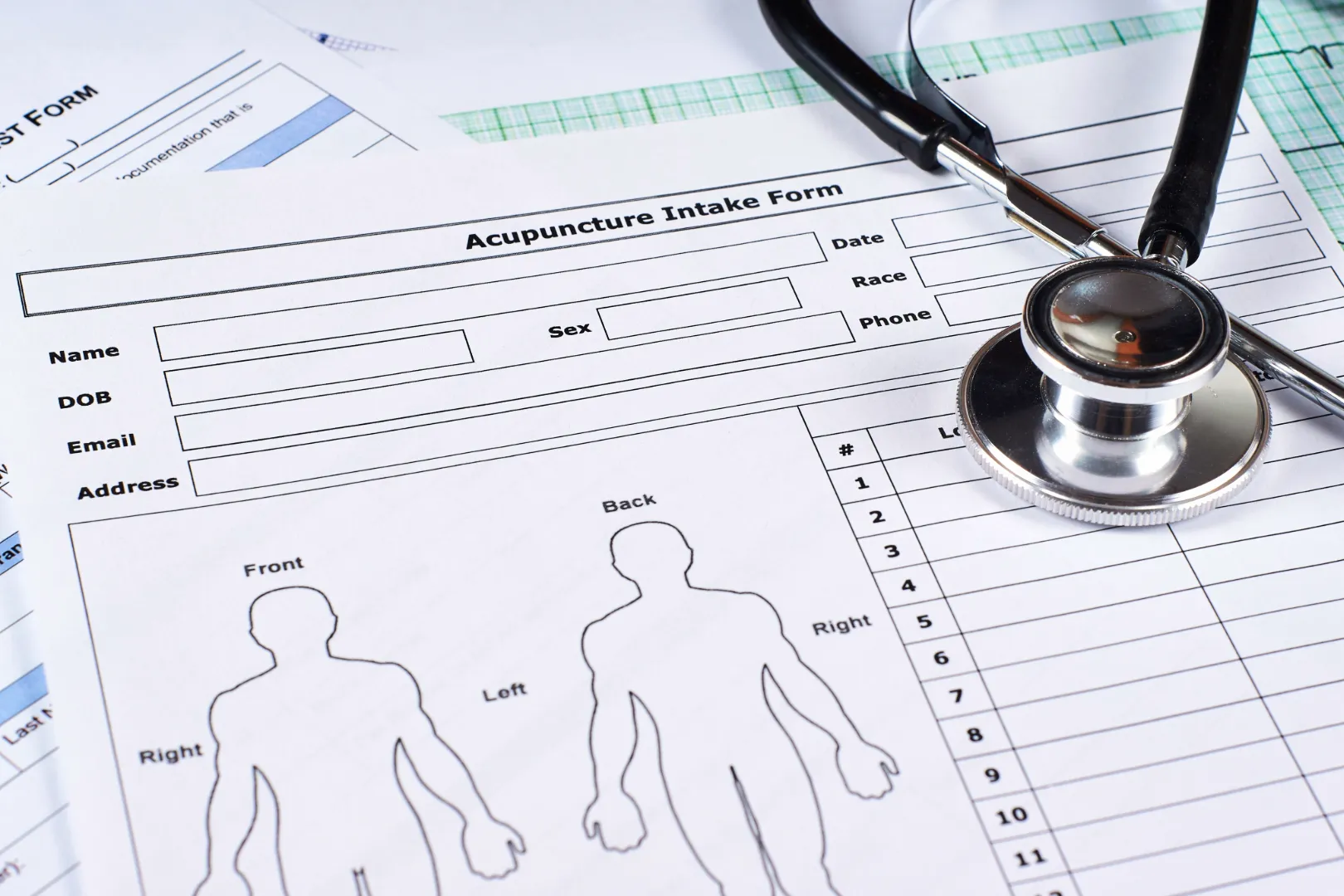
When you arrive for your first acupuncture appointment, you will be asked to complete a comprehensive intake form. The acupuncture intake form asks questions about your current state of health, past illnesses, and family history. These questions are important because the holistic approach of Oriental medicine takes everything into account. Your current symptoms may not seem related to past health issues, but our bodies are complex landscapes and everything that happens to them leaves its mark.
2. Diagnosis
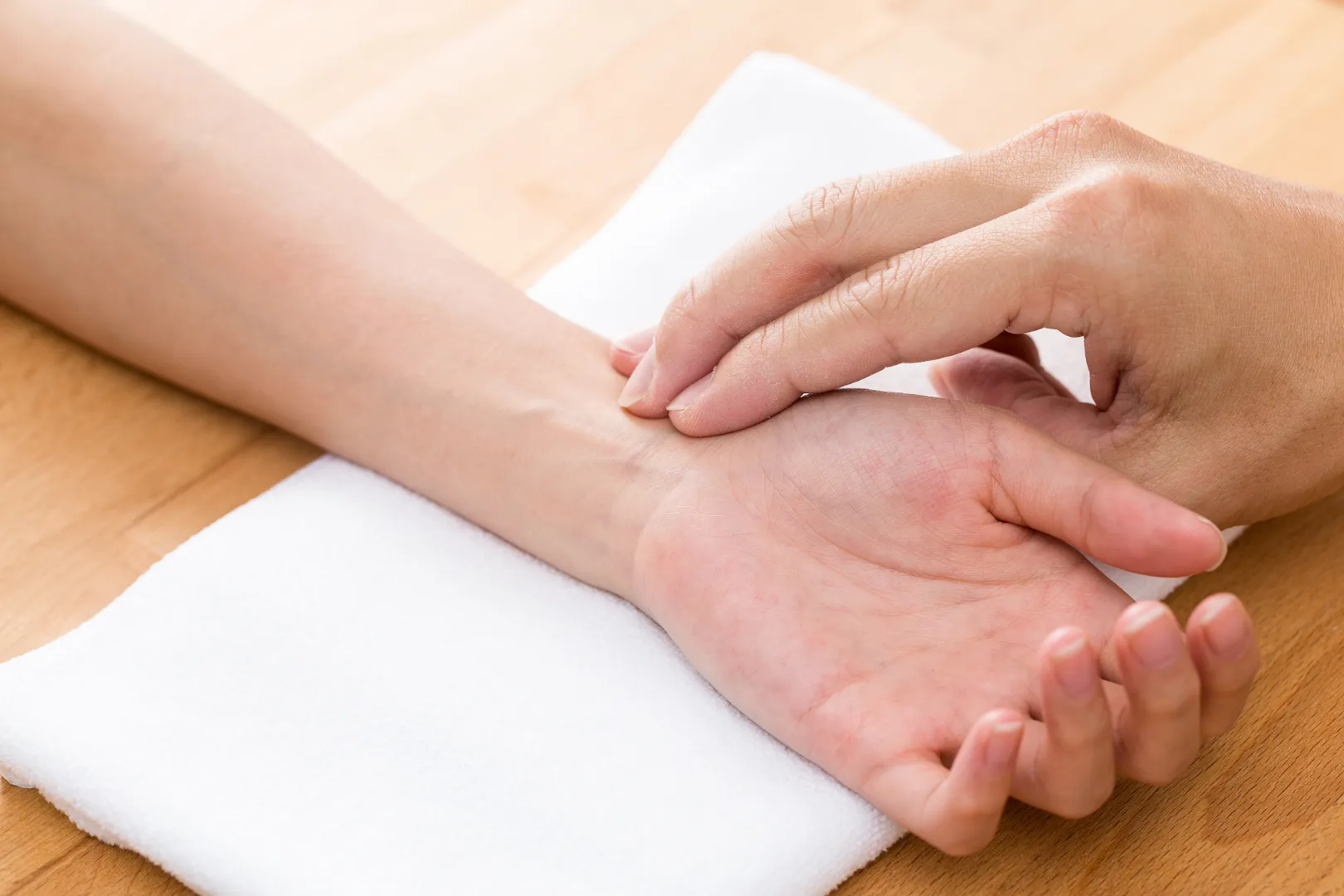
After reviewing your intake form, we will discuss your condition and examine your pulse and tongue, which are two of the basic diagnostic methods of oriental medicine. The acupuncture points chosen will depend on your condition, but you can expect approximately 20 or more needles.
3. Treatment
Once the needles are inserted, we will leave you to lie comfortably for 15-20 minutes with the needles in place. Sometimes, we will apply massage therapy on patients during the acupuncture sessions. Many people find acupuncture treatment deeply relaxing, and it is common for patients to fall asleep during this time.
Acupuncture FAQs
Several thousand years ago, East Asian practitioners discovered that the body forms disharmonies as a result of the various physical and mental stresses of life. Oriental medical theory explains these disharmonies as an imbalance of opposing forces called yin and yang. This imbalance disrupts the movement of the body's vital energy (qi) along the meridian pathways– channels through which the body's energy is thought to flow. Acupuncture restores the smooth flow of qi by inserting and manipulating needles at specific points on the body. Through acupuncture, the body is able to restore its natural balance and promote the ability to heal itself.
Many first-time patients are concerned that acupuncture needles will feel like hypodermic injections at the doctor's office. They won't. Acupuncture uses hair-thin, flexible needles that are hardly felt when inserted. When the needles are gently stimulated, the needles may produce a unique sensation that Oriental medicine calls de qi. Patients often describe de qi as a heavy, achy pressure, or a spreading, traveling feeling. You may also feel an "electrical" sensation moving down the meridian pathways, though this is less common. Most patients find these acupuncture sensations deeply satisfying and leave the treatment feeling relaxed both mentally and physically.
Each case is unique and varies patient to patient. The benefits of acupuncture are cumulative, so more than one treatment is recommended; however, relief can be felt after the first few treatments. Chronic conditions may take longer to respond, depending on the type, severity, and duration of the condition. Acupuncture is also used as preventative medicine and treatment for general well-being, this may be scheduled on an as-needed basis.
Chinese medicine has long valued preventive medicine. Historically, each village was under the care of one doctor; his job was to keep the village healthy, to keep people from getting sick in the first place. With a combination of healthy life-style habits, acupuncture and/or herbal medicines, the body can be kept in balance to prevent disease— when "disease" is broken down, it is literally dis-ease and dis-ease is the result of an imbalance. When the body is at ease, in balance, we are living our best lives and thriving.
Yes. Acupuncture is used by millions of Americans every year. Acupuncturists are required to undergo extensive education, including detailed study of human anatomy and training in Clean Needle Technique. Licensed acupuncturists are required to pass comprehensive national board examinations administered by the National Certification Commission for Acupuncture and Oriental Medicine (NCCAOM) and must be licensed by the state. As required by law, we use pre-sterilized, disposable, single-use needles to ensure your complete safety.